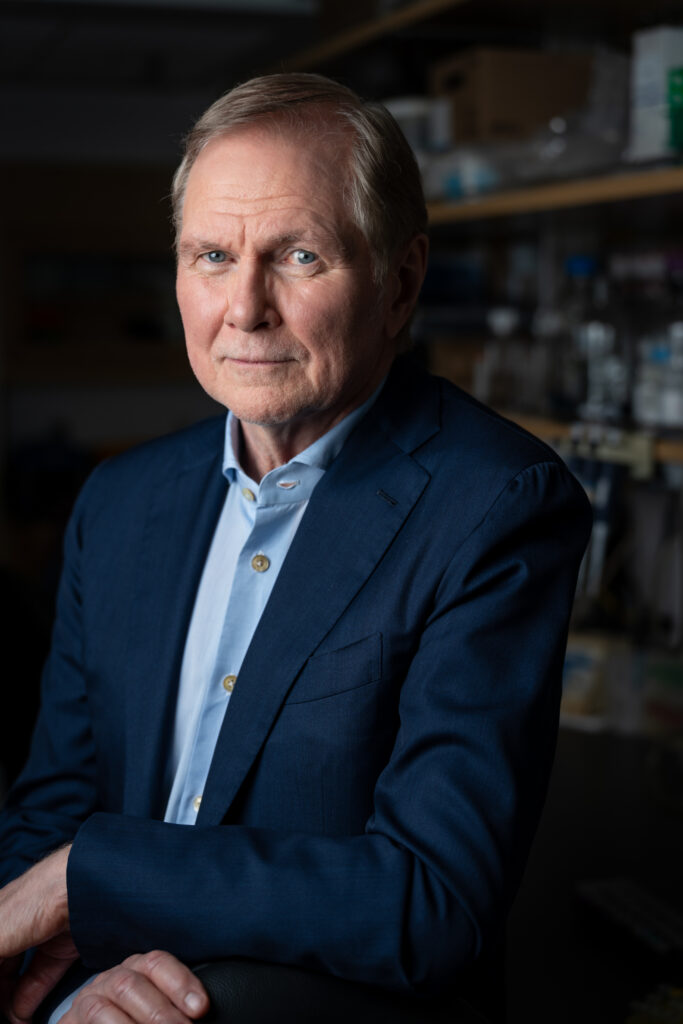
Frank McCormick, Ph.D., FRS, DSc (Hon)
Dr. Frank McCormick, is a Professor at the UCSF Helen Diller Family Comprehensive Cancer Center and holds the David A. Wood Chair of Tumor Biology and Cancer Research. Prior to joining the UCSF faculty, Dr. McCormick pursued cancer-related work with several Bay Area biotechnology firms and held positions with Cetus Corporation (Director of Molecular Biology, 1981-1990; Vice President of Research, 1990-1991) and Chiron Corporation, where he was Vice President of Research. In 1992 he founded Onyx Pharmaceuticals, a company dedicated to developing new cancer therapies, and served as its Chief Scientific Officer until 1996. At Onyx Pharmaceuticals, he initiated drug discovery efforts that led to the approval of Sorafenib in 2005 for treatment of renal cell cancer, and for liver cancer in 2007, and the approval of ONYX-015 in 2006 in China for treatment of nasopharyngeal cancer. In addition, Dr. McCormick’s group led to the identification of the CDK4 kinase inhibitor, Palbociclib, approved for treating advanced breast cancer.
Dr. McCormick’s current research interests center on ways of targeting Ras proteins and their regulators, including the NF1 protein neurofibromin.
Dr. McCormick was Director of the Helen Diller Family Comprehensive Cancer Center from 1997 to 2014 and he served as President, 2012-2013, for the American Association for Cancer Research. Since 2013, Dr. McCormick has led the National Cancer Institute’s Ras Initiative at the Frederick National Laboratories for Cancer Research overseeing the national effort to develop therapies against Ras-driven cancers. Dr. McCormick was recently awarded (September 2025) the Inaugural Stephenson Global
Prize Award in recognition of his research and discoveries that have transformed the field of
RAS-driven cancers.
Dr. McCormick is the author of over 430 scientific publications and holds more than 20 issued patents and is a Fellow of the Royal Society and a member of the National Academy of Sciences.